
VRE Case Studies
VREs are currently being used across a range of research projects from environmental monitoring to heritage conservation. The following case studies showcase ongoing projects funded through the HSDS Grants Programme, each using the VRE to tackle research challenges that would otherwise be limited by access to specialist infrastructure or computing power.
Bayesian chronological analysis for all — Historic England
Radiocarbon dating is the backbone of archaeological chronology, but advanced Bayesian modelling techniques are beyond the reach for most of the heritage sector. Fewer than ten UK institutions currently have the infrastructure to offer complex Bayesian modelling, limiting access to this tool. By hosting specialist Bayesian modelling software within the HSDS VRE, Historic England is opening up this technique, making it accessible to researchers and heritage professionals across the UK and beyond — no local infrastructure is required.
Capturing Grain Geometry: an automated workflow for archaeobotanical collections - Bodleian Libraries, University of Oxford

Understanding the genetic history of ancient crops relies on geometric morphometrics (GMM) — comparing precise measurements from microscope photographs of cereal grains to trace relationships between varieties across time. At scale, the process is painstakingly slow, requiring researchers to manually trace thousands of individual grain photographs before any analysis can begin. This project uses the HSDS VRE to automate this process. Drawing on the Bodleian Libraries' collection of 6,599 medieval grain photographs, the VRE delivers an end-to-end automated workflow — an Ancestry.com for cereal crops.
Digital Dimensions: Heritage Science and Heritage Crime Investigation - University of Chester
Heritage crime causes lasting damage to irreplaceable assets, yet investigations are hampered by inconsistent recording procedures across police forces and a lack of access to specialist analytical tools. Processing the complex, data-heavy evidence — such as LiDAR scans and point-cloud datasets — that modern heritage crime investigation demands is beyond the reach of most forces. The use of the HSDS VRE gives investigators rapid access to powerful visualisation and processing tools used by archaeologists, breaking down barriers between policing and heritage science techniques.
Scalable 2.5D: A High-Performance VRE For Accelerating Heritage Photogrammetry and RTI Workflows - Centre for Print Research, University of the West of England
Many heritage organisations can capture rich surface data but lack the computing power to do anything useful with it. Processing high-resolution photogrammetry and RTI datasets is demanding — tasks that can take days on a standard computer, putting large-scale analysis out of reach for most. This HSDS VRE eliminates that bottleneck, delivering the high-performance processing needed to generate detailed 2.5D surface images that reveal features invisible to standard photography. This is vital evidence for conservation, research and public interpretation, accessible without specialist hardware.
Virtual Research Environment for automated feature detection of cultural heritage in large-scale lidar data - Historic England
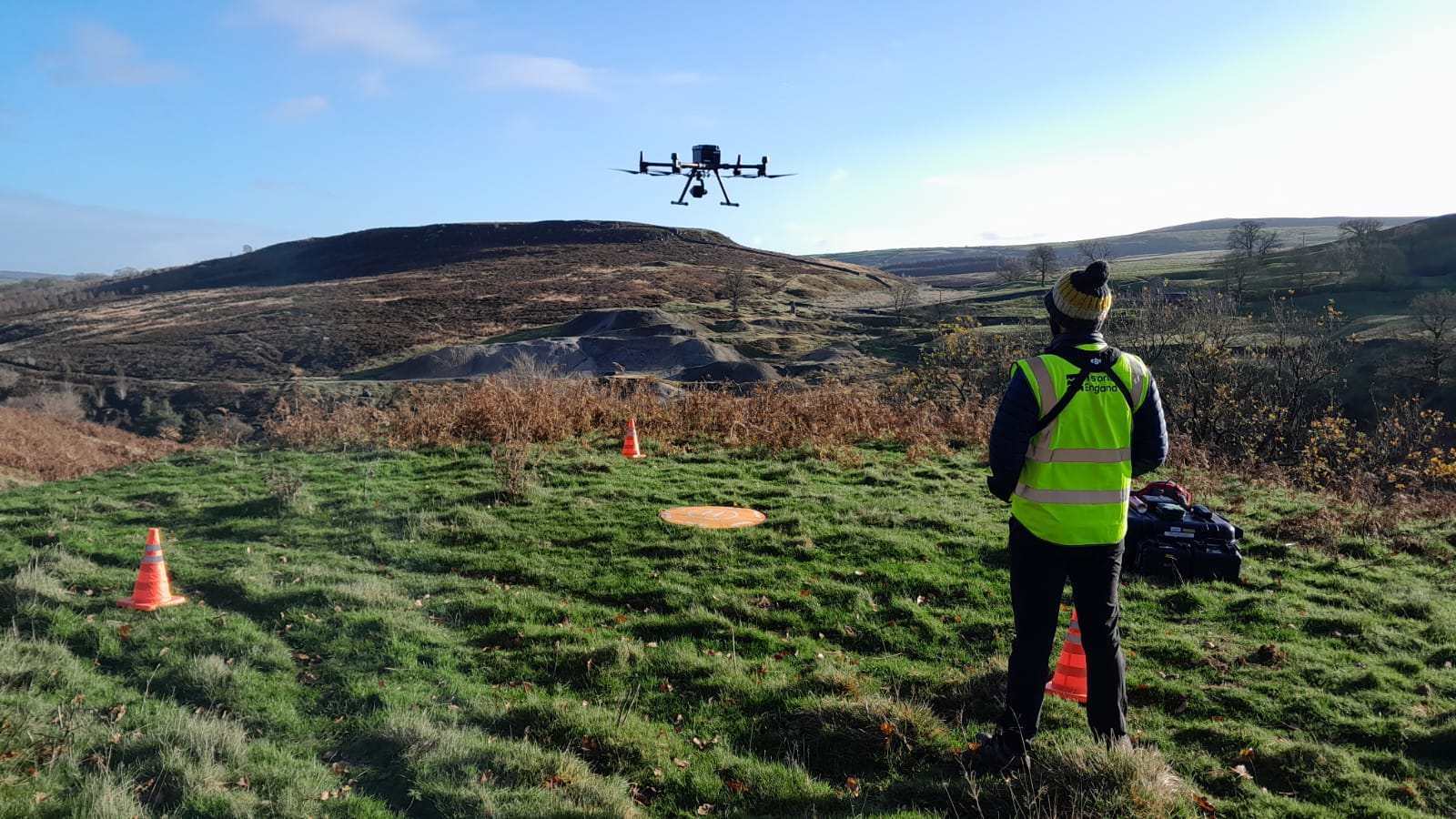
Identifying cultural heritage features in airborne laser scanning (ALS) data is slow, specialist work. AI tools that could transform the process have seen limited adoption, with outputs rarely shared, leading to duplicated effort and a widening skills gap. This HSDS VRE puts AI-powered feature detection into the hands of the wider heritage sector. Built on open-source tools, it provides access to national-scale ALS data, automated detection workflows, and a shared space for models and outputs — turning these materials into a collaborative, sector-wide resource.