
Over £500,000 awarded to enable 43 organisations across the UK to investigate historic sites, reveal new stories about museum collections, improve conservation techniques and tackle some of the biggest challenges facing cultural heritage through the first Research Infrastructure for Conservation and Heritage Science (RICHeS) Access Fund.
Over £500,000 has been awarded through the first call of the RICHeS Access Fund to 43 organisations across all four nations of the UK, enabling them access to specialist heritage science facilities, collections and expertise that would otherwise have been beyond their reach.
The successful organisations include museums, galleries, libraries, archives, charities, community organisations, freelancers, independent researchers and universities. Many are accessing this kind of scientific infrastructure for the first time, having previously lacked the resources, networks or institutional pathways to work with advanced heritage science facilities. For many award holders, this is the first opportunity to undertake this type of research without requiring affiliation to a university or an Independent Research Organisation (IRO).
The RICHeS Access Fund was created to remove those barriers, opening participation in heritage science to a far wider range of organisations. By providing access support, the RICHeS Access Fund is enabling organisations of all sizes, including those outside traditional research environments to ask new questions, develop innovative approaches and contribute to the UK’s heritage science capability.
The response to the inaugural RICHeS Access Fund call was exceptionally strong, reflecting both the demand for specialist facilities and the appetite, across organisations of every size, to put scientific research to work answering new questions about the UK’s shared heritage.
The projects now underway will:
- Uncover new evidence about historic objects, buildings and archaeological sites
- Improve conservation methods for nationally significant collections
- Investigate the impacts of climate change and environmental conditions on heritage
- Apply advanced imaging and scientific analysis to reveal previously hidden information
- Create new digital resources and research data that will benefit future generations
Projects will draw on facilities and collections distributed throughout the RICHeS network, reflecting the breadth of expertise available across the UK’s heritage science infrastructure.
Professor Meggen Gondek, RICHeS IHQ, said:
‘RICHeS is incredibly proud that our network of facilities and expertise is going to be able to contribute to so many meaningful projects across the UK. Unlocking the potential of our past through heritage science is just the start and we look forward to seeing how the successful applicants will use these new revelations and breakthroughs to tell new stories, protect heritage and develop impact for their communities.’
From access to impact
The RICHeS Access Fund represents more than an investment in individual research projects, it represents a significant expansion of who can participate in heritage science. For many of the successful organisations, this is the first time they have been able to access advanced scientific facilities, specialist collections and technical expertise of this kind. Without the support of the RICHeS Access Fund, many of these projects would not have been possible.
By removing financial and practical barriers, the RICHeS Access Fund is enabling organisations that have historically had limited access to research infrastructure to undertake ambitious investigations, develop new partnerships and build confidence in using scientific approaches to address heritage challenges. The impact extends beyond individual projects, the funded work will generate new knowledge, strengthen conservation practice, develop sector capability and create lasting connections between heritage professionals, researchers, communities and the RICHeS infrastructure.
Each funded project has its own objectives, but together they represent a significant investment in the future of the UK’s heritage sector. The examples below offer a snapshot of the work now beginning across the UK.
The Naburn Whale: A new Yorkshire icon
- Project Lead: Sarah King, York Museums Trust
- RICHeS Investment Lead: BIOARC-HS
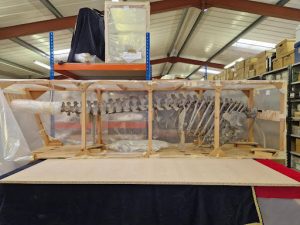
The Naburn Whale skeleton, currently in storage at York Museums Trust. Image courtesy of York Museums Trust.
York Museums Trust, an independent charity, is uncovering the remarkable story of the Naburn Whale, a rare specimen that has been part of York Museums collection for over a century. The mounted skeleton is believed to be the white (beluga) whale stranded at Naburn Lock in 1905, far from its Arctic home, but its species has never been scientifically confirmed.
Using modern scientific techniques, including Zooarchaeology by Mass Spectrometry (ZooMS), the analysis will confirm the specimen’s identification and unlock its potential for research, learning and public engagement. The whale will become the centrepiece of a new exhibition exploring Yorkshire’s wildlife, biodiversity and climate challenges, inspiring visitors to connect with nature and reflect on our changing relationship with the natural world.
Dr Sarah King, Curator of Natural Science at York Museums Trust, said:
‘We are delighted to have been selected as a recipient for the Access Fund. This funding will enable us to delve deeper into our extensive biology collection, uncover the forgotten or hidden stories of the Naburn whale specimen and present this information back to the people of Yorkshire and our museum visitors from around the world. As a charity, York Museums Trust is always incredibly grateful for the generosity of these funding schemes which help us to provide valuable insight into the rich and varied sites and collections in our care.’
Bouldnor and the Submerged Solent
- Project Lead: Garry Momber, Maritime Archaeology Trust
- RICHeS Investment Lead: Coastal and Inland waters Heritage Science Facility
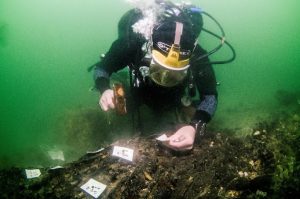
Maritime Archaeology Trust’s Garry Momber preparing an 8,000 year old structure for recovery from an eroding submerged landscape in the Solent.
Maritime Archaeology Trust, a charity dedicated to exploring and protecting underwater cultural heritage, is investigating a hidden prehistoric landscape beneath the waters of the Solent, the stretch of sea between Hampshire and the Isle of Wight, lies a hidden prehistoric landscape that reveals how people lived thousands of years ago. Once a dry river valley, forest and coastal environment, this ancient landscape was gradually submerged as sea levels rose after the last Ice Age.
Around Bouldnor on the Isle of Wight, archaeologists have discovered some of the UK’s only surviving in-situ Mesolithic settlement sites, including wooden structures and thousands of worked flint tools dating back over 8,000 years. Coastal erosion is exposing and threatening these remains but is also creating a unique opportunity to study a perfectly preserved prehistoric environment. This investigation will use marine bathymetry and sub-bottom profiling to map the submerged landscape, investigate how is has changed over time and share the story of this lost landscape, connecting communities with the archaeology, climate change and human history hidden beneath the Solent.
Garry Momber, Director at Maritime Archaeology Trust, said:
‘The Maritime Archaeology Trust is thrilled to receive support through the RICHeS Access Fund to help uncover secrets from the cultural heritage hidden below the waves in Bude, Langstone Harbour and the Solent. The survey capability that the fund provides will, for the first time, reveal buried features that feed into our understanding of the changing coastline, shipwrecks and the people that found themselves on both. The results will provide new evidence about our forebears that will feed into the Maritime Archaeology Trust’s research and our broader education programme.’
New Narratives of the Norman Conquest: Dating Bosham’s ‘Bayeux Tapestry’ Power Centre
- Project Lead: Duncan Wright, Newcastle University
- RICHeS Investment Lead: Institute for Heritage and Environmental Science: 14CHRONO

Harold Godwinson at Bosham, as depicted on the Bayeux Tapestry. Engraved by James Basire (1769–1822), after Stothard; hand-painted by Charles Alfred Stothard (1786–1821). Image: © courtesy of The Society of Antiquaries of London.
Newcastle University are investigating the story of the Norman Conquest, in part, at Bosham in West Sussex, the power centre of Harold Godwinson, England’s last Anglo-Saxon king. Depicted on theBayeux Tapestry, Bosham was where Harold prepared for his journey to Normandy in 1064, but the true story of this important site is only now being uncovered.
Recent archaeological research has revealed the remains of a high-status Anglo-Saxon hall and later medieval buildings, offering new insights into elite life before and after the Conquest. This project will use advanced scientific dating techniques to establish the exact timeline of these discoveries, transforming our understanding of Bosham’s role in early medieval England. Coinciding with the 2026 Year of the Normans and the Bayeux Tapestry display in the UK, the project will bring new perspectives to one of the country’s most significant medieval heritage sites.
Dr Duncan Wright, Senior Lecturer in Medieval Archaeology, said:
‘The generous support of the RICHeS Access Fund will allow the first scientific dating of Harold Godwinson’s palace at Bosham, a site made famous by its depiction on the Bayeux Tapestry. The site of Harold’s enclave was identified in 2024 by the AHRC-funded project Where Power Lies, but it is not entirely clear when the site was founded and how it evolved over time. This RICHeS Access Fund will support dating of both standing buildings as well as buried archaeological remains at Bosham; the work will provide a detailed chronology of Harold’s famous site to be developed, in the year that the Bayeux Tapestry comes to the UK for the first time.’
Bayeux Tapestry, Bosham was where Harold prepared for his journey to Normandy in 1064, but the true story of this important site is only now being uncovered.
Recent archaeological research has revealed the remains of a high-status Anglo-Saxon hall and later medieval buildings, offering new insights into elite life before and after the Conquest. This project will use advanced scientific dating techniques to establish the exact timeline of these discoveries, transforming our understanding of Bosham’s role in early medieval England. Coinciding with the 2026 Year of the Normans and the Bayeux Tapestry display in the UK, the project will bring new perspectives to one of the country’s most significant medieval heritage sites.
Dr Duncan Wright, Senior Lecturer in Medieval Archaeology, said:
‘The generous support of the RICHeS Access Fund will allow the first scientific dating of Harold Godwinson’s palace at Bosham, a site made famous by its depiction on the Bayeux Tapestry. The site of Harold’s enclave was identified in 2024 by the AHRC-funded project Where Power Lies, but it is not entirely clear when the site was founded and how it evolved over time. This RICHeS Access Fund will support dating of both standing buildings as well as buried archaeological remains at Bosham; the work will provide a detailed chronology of Harold’s famous site to be developed, in the year that the Bayeux Tapestry comes to the UK for the first time.’
Animal bones as powerful carriers of meaning: memory and identity, life and death
- Project Lead: Mandy Keating, Freelance Specialist
- RICHeS Investment Lead: SHEFF BIOARCH
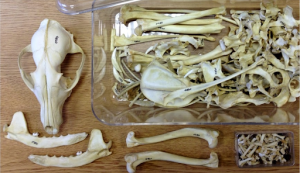
A disarticulated animal skeleton organised for identification and examination at SHEFF BIOARCH
Hidden within scientific collections, animal bones hold stories about life, death, environments and the changing relationship between humans and animals. This project brings a specialist zooarchaeology collection to new audiences through collaboration between researchers and artists.
Independent freelance specialist is working with animal skeletons from Sheffield’s BIOARCH reference collection, four artists will explore themes of memory, identity and human–animal connections, transforming scientific specimens into creative works that encourage reflection and discussion. Presented through the Festival of the Mind, the project will reveal the wider significance of animal bone collections beyond research and teaching, combining science and creativity to open new ways for audiences to understand the past and our changing relationship with the natural world.
Mandy Keating, Freelance Artist, said:
‘Animal bones are rich cultural and scientific resources that preserve evidence of biology, human–animal relationships, and environmental and cultural change across time. They provide a unique way of exploring questions of memory, identity, life, and death. Artists will bridge research and the arts to reveal new perspectives on bone collections.’
These four projects represent just a small sample of the diverse work supported through the first RICHeS Access Fund.
Across the UK, funded organisations will investigate subjects ranging from Roman military landscapes and prehistoric archaeology to historic bridges, museum collections, archival records, maritime heritage and climate resilience. Together, they demonstrate how access to world-class heritage science infrastructure enables organisations to answer new research questions, strengthen conservation practice and create lasting public benefit.
A lasting legacy
Where appropriate, research data generated through the RICHeS Access fund will be deposited with the Heritage Science Data Service (HSDS), ensuring outputs are Findable, Accessible, Interoperable and Reusable (FAIR). This growing evidence base will support future research, enable wider collaboration and maximise the long-term value of the investment, the first step in strengthening the UK’s heritage science capability and building organisational confidence in scientific research across the sector.
Looking ahead
The first round RICHeS Access Fund demonstrates the transformative potential of widening access to heritage science infrastructure. Over the coming months, RICHeS will share stories, discoveries and outcomes from these organisations, highlighting the difference this investment is making for organisations, researchers and communities across the UK.
A second Access Fund call is planned to launch this autumn, creating further opportunities for organisations to access the RICHeS infrastructure and develop ambitious new research.
Today’s announcement marks the beginning of a more open, collaborative and inclusive approach to heritage science. One that enables organisations of every size to use world-leading scientific expertise to better understand, protect and share the UK’s cultural heritage.
Latest News & Events
See all
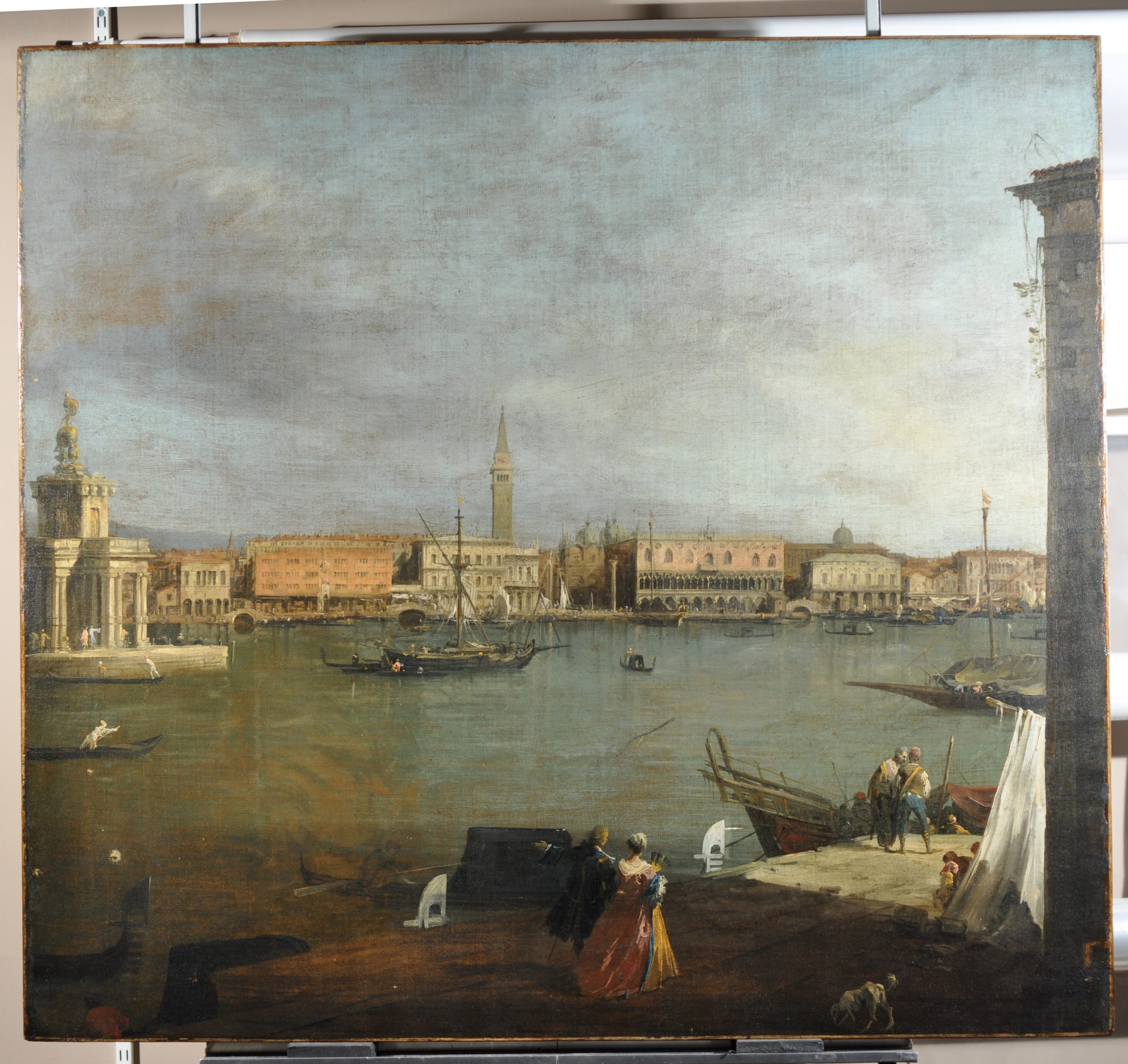
National Gallery Presents Paint Sample Data Work at ICOM-CC 2026
Our partners at the National Gallery, London are in Oslo this week for the...
National Gallery to Showcase HSDS Work at IIC Congress
We’re delighted that our partners at the National Gallery, London are presenting a poster...
New Ingest Training Sessions: Book Now for August–December
Four months on from the launch of Ingest we are pleased to announce that...